
What is fair in divorce?
Many people walk into a divorce in an "Equitable Distribution" state assuming they are automatically entitled to exactly half of everything. When the judge suggests a 60/40 or 70/30 split based on "need" or "contribution," the resulting shock can lead to erratic, expensive legal maneuvers. You cannot budget for your future if you are using the wrong math.
Will my partner get half of everything in the divorce?
The rules of the game change based on your zip code. In Community Property states (like California), the law is a blunt instrument: almost everything acquired during the marriage is owned 50/50. The assets are generally sliced right down the middle. However, in Equitable Distribution states, "fair" does not always mean "equal". The court looks at the length of the marriage, each spouse's financial contribution, and their future needs to decide what is "fair".
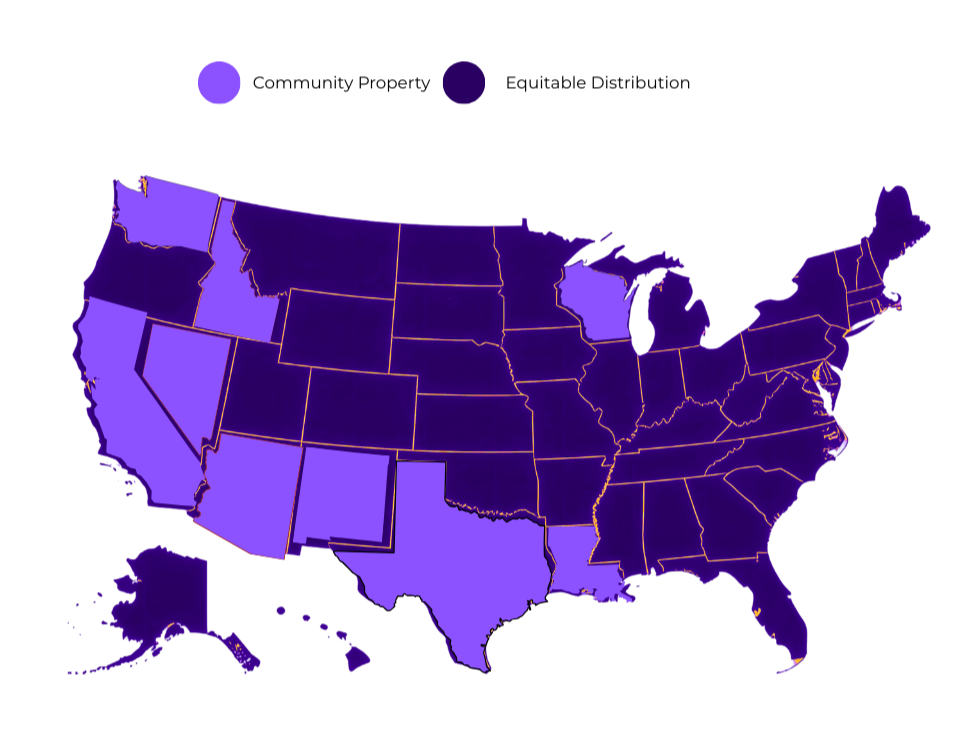
Where you live matters
41 U.S. states (plus D.C.)considers factors like each spouse's contribution to the marriage (financial and non-financial), to divide the assets fairly.
Community Property vs. Equitable Distribution: Community property states mandate an equal 50/50 split of all assets and debts acquired during marriage. Equitable distribution states there is no automatic 50/50 split. The court considers factors like each spouse's contribution to the marriage (financial and non-financial), the length of the marriage, and the needs of each spouse to divide the assets fairly.
The Wealth Preservation Strategy If you don't know which rule applies to you, you are essentially gambling with your net worth. Knowing the "fairness" factors and what criteria the judge uses in your state allows you to negotiate from a position of fact, not fantasy.
Watch our episode with Eliza Ghanooni, to learn more about divorce and bankruptcy. Heaven forbid, and watch our episode or read all about “What to do about the House”